
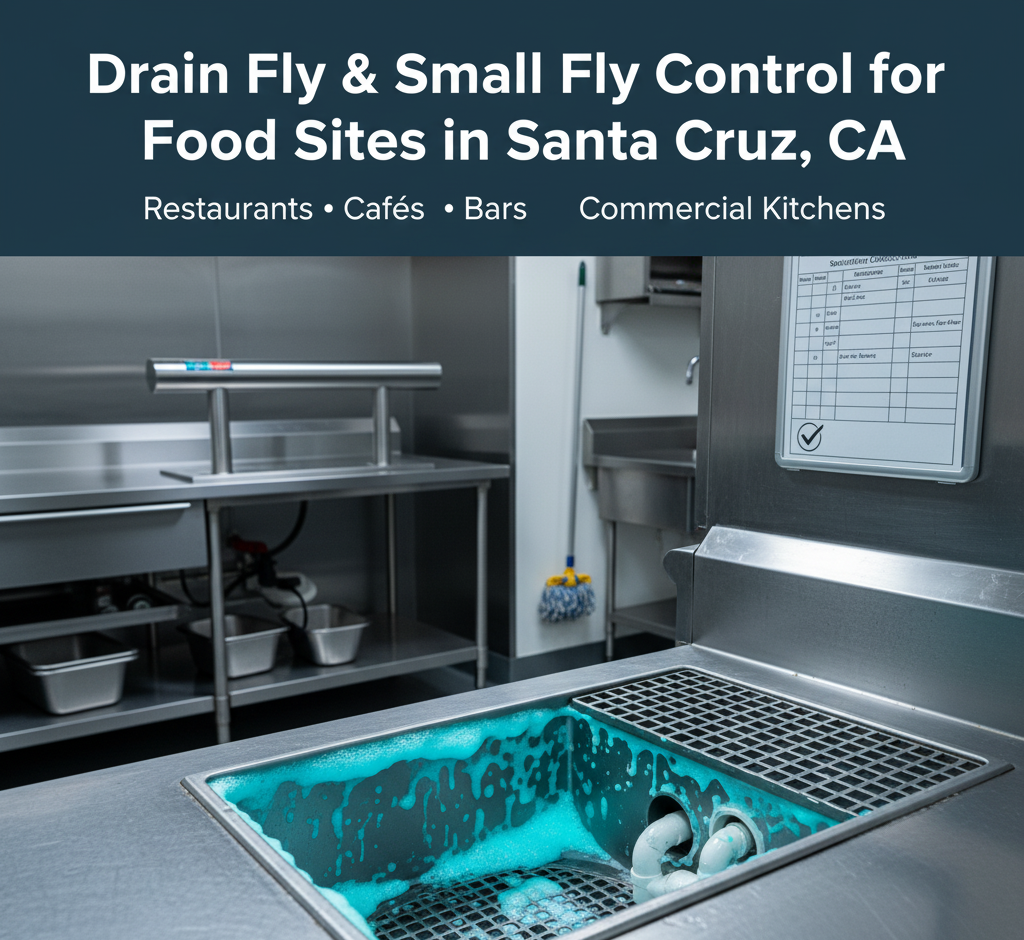
Drain Fly & Small Fly Control for Food Sites in Santa Cruz, CA
Restaurants • Cafés • Bars • Grocers • Commercial Kitchens
Drain flies, fruit flies, and phorid flies explode when organic slime builds up in drains, floor sinks, beverage lines, and mop stations. Beyond being a nuisance, they signal sanitation gaps that can draw inspector attention. Our Santa Cruz program pairs enzyme-based bio-treatments with a strict sanitation matrix and after-hours scheduling to clear harborage, cut breeding, and keep you inspection-ready.Need broader BOH support beyond small flies? Explore our full restaurant program for kitchens, bars, and BOH audits—integrated IPM built for inspections.
How do you get rid of drain flies in a Santa Cruz restaurant?
Drain flies usually come from slime inside drains and floor sinks, not from the air outside. The fastest results come from scrubbing the drain walls, then using an enzyme gel or foam for several nights, plus a simple cleaning checklist to prevent rebound.
Need help now?
Call (831) 263 6611
Local Insight: Why Small Flies Thrive Here
Ocean fog + mild temps = moisture that never quite dries, especially in floor sinks, bar rails, P-traps, and behind equipment. This creates the perfect, year-round breeding medium for small flies across the Santa Cruz microclimate.
- Drain Flies (Psychodidae): Breed in under-lip slime of drains, mop sinks, and floor sinks.
- Fruit Flies (Drosophila): Target fermenting organics in bar mats, wells, speed rails, fruit storage, and recycling.
- Phorid Flies (Phoridae): Emerge from decaying matter in cracks/voids under equipment, broken tile grout, and saturated mop areas.
We eliminate the breeding media—the only sustainable way to pass inspections and stop rebounds.
Signs You Need a Pro Program
- ● Small flies hovering at drains/floor sinks (worse during slow hours).
- ● Musty odors, visible slime on P-traps or under-lip edges.
- ● Sticky traps/UV ILTs filling quickly; night counts rising.
- ● Phorids “running” on walls/floors, often misidentified as ants.
- ● Inspector notes on flies or sanitation log gaps.
What You Get: Our 4-Step IPM Program (Built for Food Sites)
Inspect & Map (Photo-Backed)
UV light + borescope checks of drains, wells, lines, and dumpster/grease pad. We deliver a labeled hotspot map and priority list.
Mechanical Reset
Brush/scrape under-lip edges, clean P-traps, soak bar caddies/mats, and clear broken-grout pockets so enzymes can start working.
Mechanical resets often expose BOH gaps that roaches exploit. Pair this with our targeted gasket/hinge/void treatments for cockroaches to prevent rebounds from adjacent harborage.
Enzyme Foam/Gel Dosing
Apply adherent enzyme foams/gels that cling to digest biofilm (nightly start → taper to weekly maintenance). Targeted IGR added for stubborn phorid voids.
Sanitation Integration + Monitoring
Install a laminated CIP matrix, train staff, place sticky monitoring cards, and log trends with photos for **audit-ready documentation**.
Typical Timeline: Slight day 1–3 spike as larvae flush → major reductions by days 4–7 → breeding collapse by week 2+.
What Makes This Different vs “Spray and Pray”
Source Elimination
Biofilm removal first (mechanical + enzymes) so breeding stops at the source, preventing chemical resistance.
Audit-Ready Compliance
We provide Verification Logs with counts, photos, and trend graphs you can immediately show health inspectors.
Seamless Operations
We offer after-hours service to avoid guest disruption and ensure CIP alignment (no enzyme-killing bleach in the same window).
Your Sanitation Matrix (Ready to Laminate & Post)
We tailor this to your exact layout. The key is setting clear, enzyme-compatible CIP routines for high-risk zones.
| Zone | Daily Close | 2–3×/Week | Weekly |
|---|---|---|---|
| Kitchen Floor Drains / Sinks | Hot water flush 60–90 sec; squeegee dry. | Brush under-lip & strainer. | Degrease splash; enzyme gel dose overnight. |
| Bar Wells & Speed Rails | Lift/soak caddies, mats; wipe rails dry. | Enzyme foam in wells; clean soda gun holsters. | Deep clean rail holders & brackets. |
| Mop Sink / Station | Empty bucket; hang mop to dry (no heads in water). | Degrease walls/floor; replace dirty water mid-shift. | Enzyme dose in sink and floor drain edge. |
| Dumpster / Grease Pad | Lids closed; pick up scraps. | Degrease splash zone. | Enzyme pour on trench/drain edges. |
Important: Avoid bleach/ammonia within 8–12 hours of enzyme dosing (kills the microbes).
FAQs — Drain Fly / Small Fly Control for Food Sites
As the enzymes start to loosen and digest the biofilm, larvae are flushed out. This is a temporary sign the process is working and typically stabilizes fast as the enzymes digest the organic film.
Yes. The treatments are specifically designed for drains and organic residues in food facilities. We apply them after hours and provide clear re-entry/ventilation guidance.
Yes, **after-hours service is standard** for restaurants and bars. This minimizes guest disruption and ensures maximum effectiveness for the enzyme dosing process.
We provide an audit-ready log including sticky card counts, UV ILT catch logs, photo evidence of cleaned areas, and trend graphs showing weekly reductions.
FAQ
Ready for Inspection-Ready Results?
We’ll map hotspots, embed enzyme-compatible routines, and verify reductions with logs and photos.
Call to Map Your Startup Reset: (831) 263-6611Enzyme Bio-Treatments • Audit-Ready Logs • After-Hours Service • Licensed & Insured • Fast response for food businesses